
1 / 5
Automatic Rain-Sensing Cloth Shade System
A Smart System That Automatically Pulls Clothes Under Shelter When Rain Is Detected.
Project Gallery
8 files · click to zoom · download icon on each image
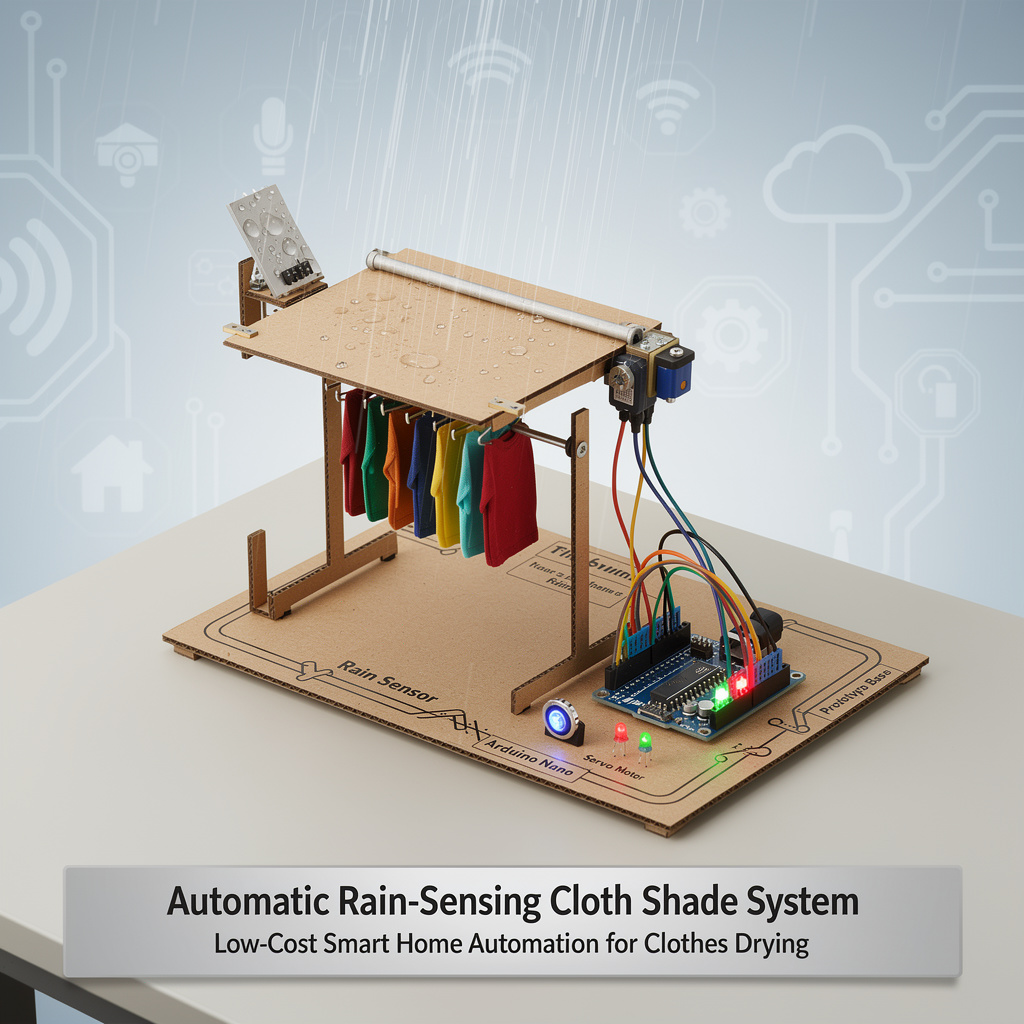
About This Project
Rain sensor, Arduino Nano, Servo motor, Buzzer, LEDs, Cardboard model, Jumper wires, Power supply (battery/adapter), Resistors, Mounting hardware
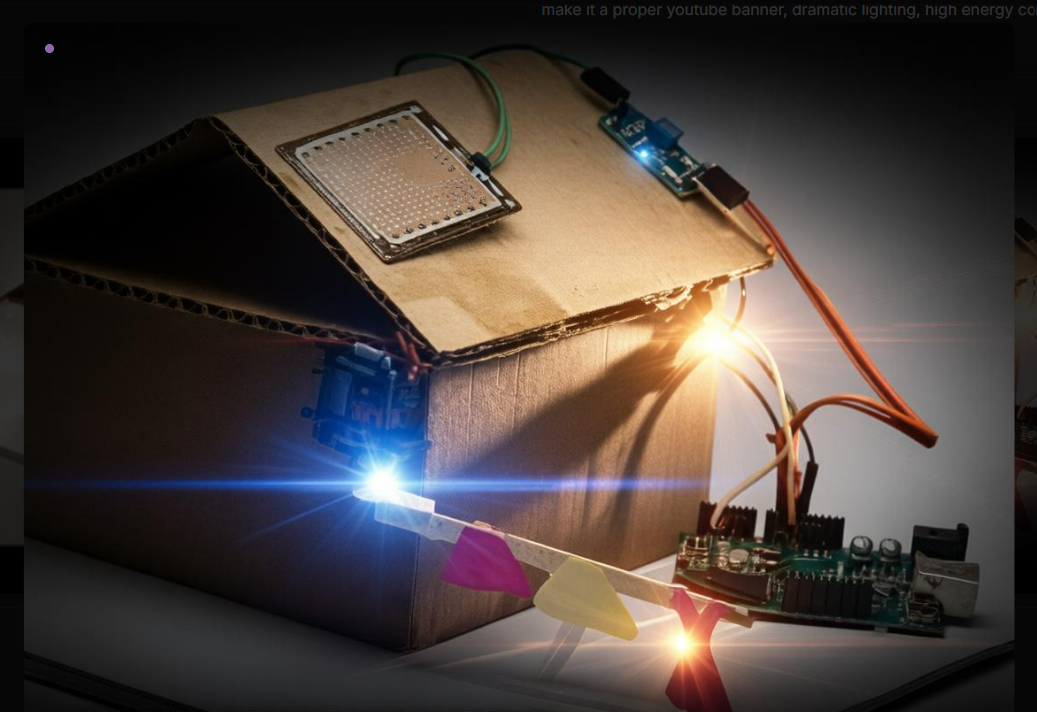
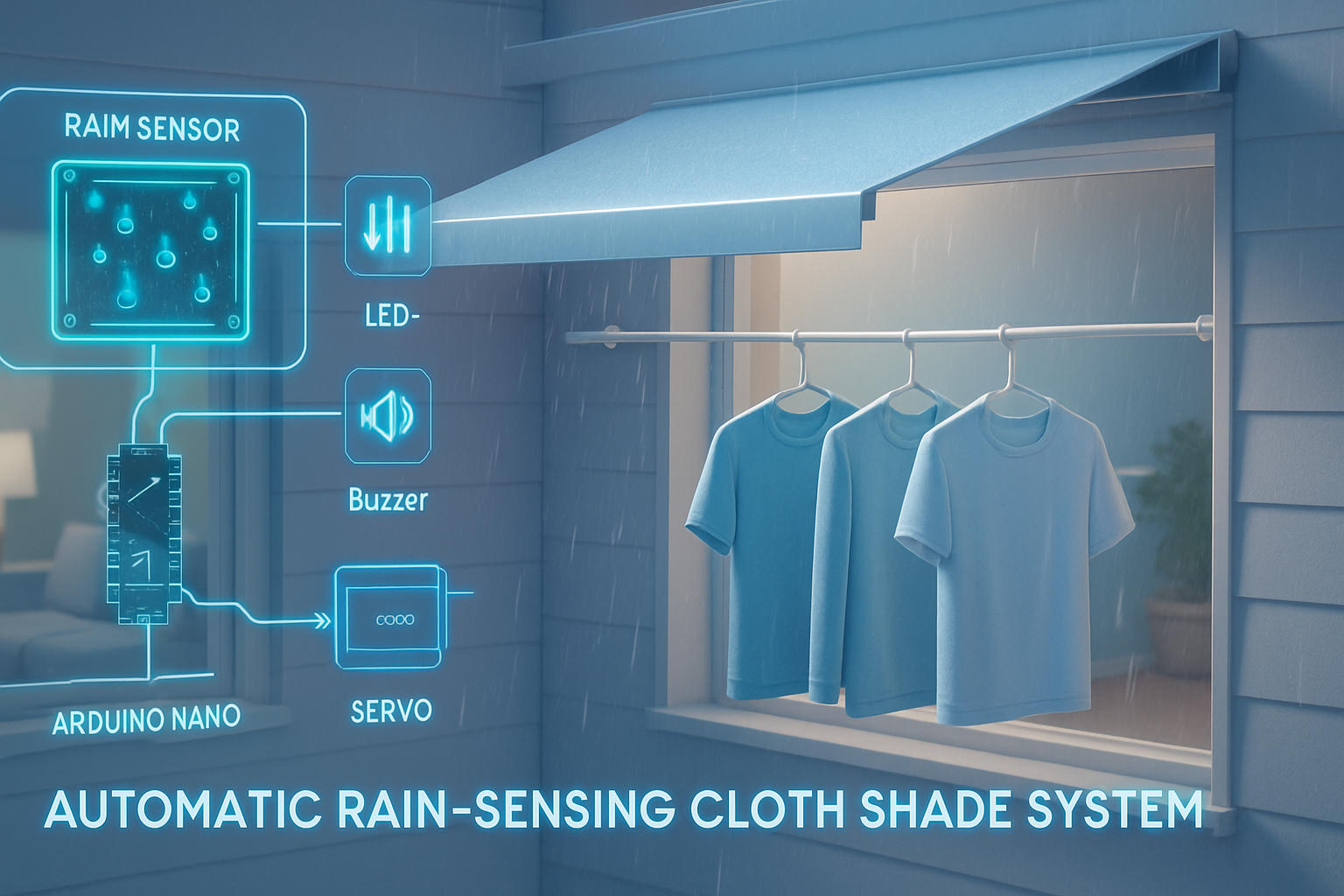
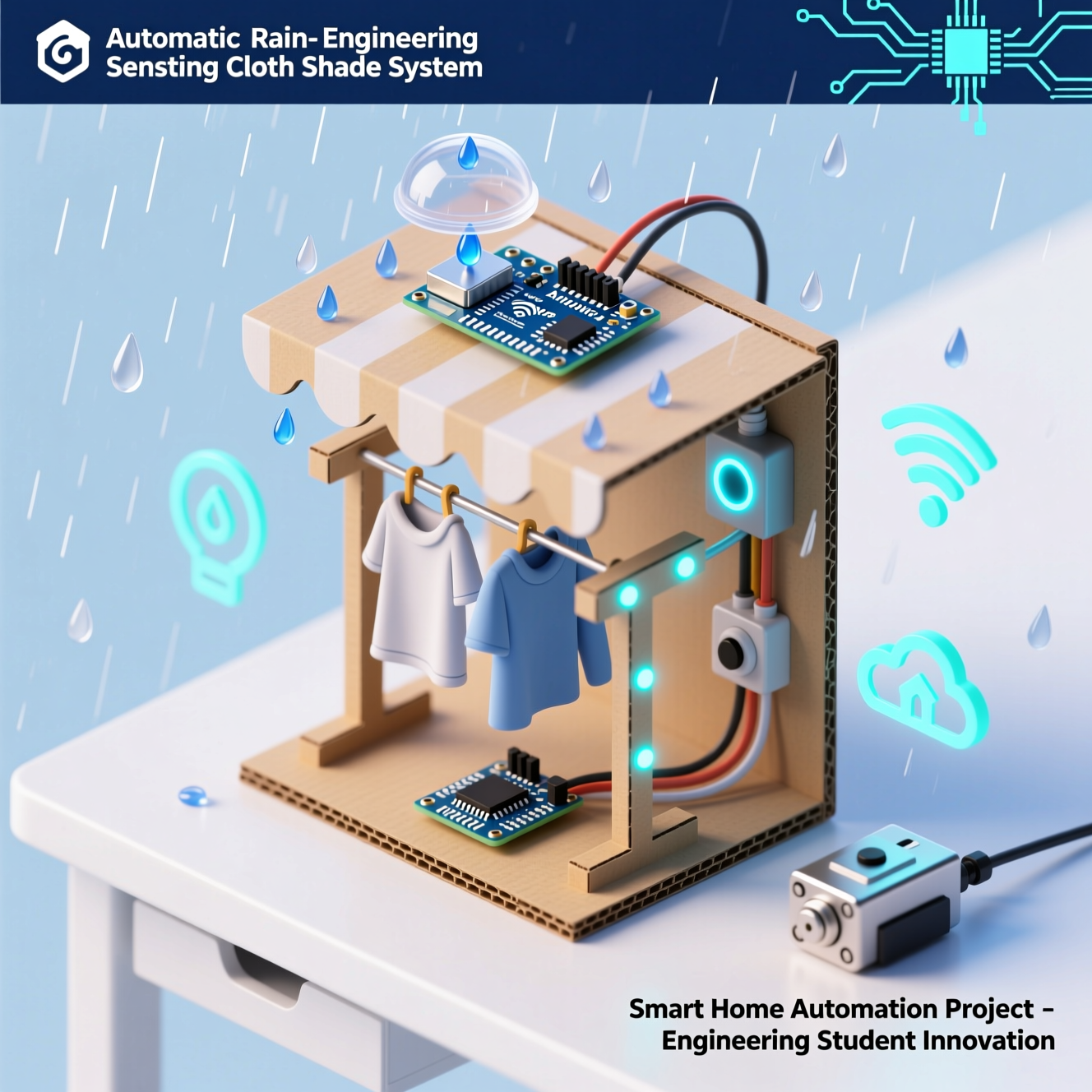
This project presents the design and implementation of an Automatic Rain-Sensing Cloth Shade System, a mini-project aimed at addressing a common household challenge. Sudden rainfall often forces people to rush outdoors to collect their drying clothes, which is inconvenient and sometimes ineffective. To overcome this issue, a rain sensor detects the presence of raindrops and sends a signal to the Arduino Nano microcontroller. The Arduino then triggers a servo motor mechanism that moves the cloth stand into a sheltered space. A buzzer and LED indicators alert users about the rainfall detection and system activity. The entire setup is modeled on a small-scale prototype using a cardboard shelter to simulate real-life operation. This project is affordable, energy-efficient, and practical for everyday use. It highlights the potential of simple automation in improving quality of life while serving as an excellent learning project for engineering students.
rain detection, Arduino Nano, servo motor, automation, rain sensor, cloth protection, buzzer alert, LED indicator, prototype, low-cost, home automation, sensor-actuator integration
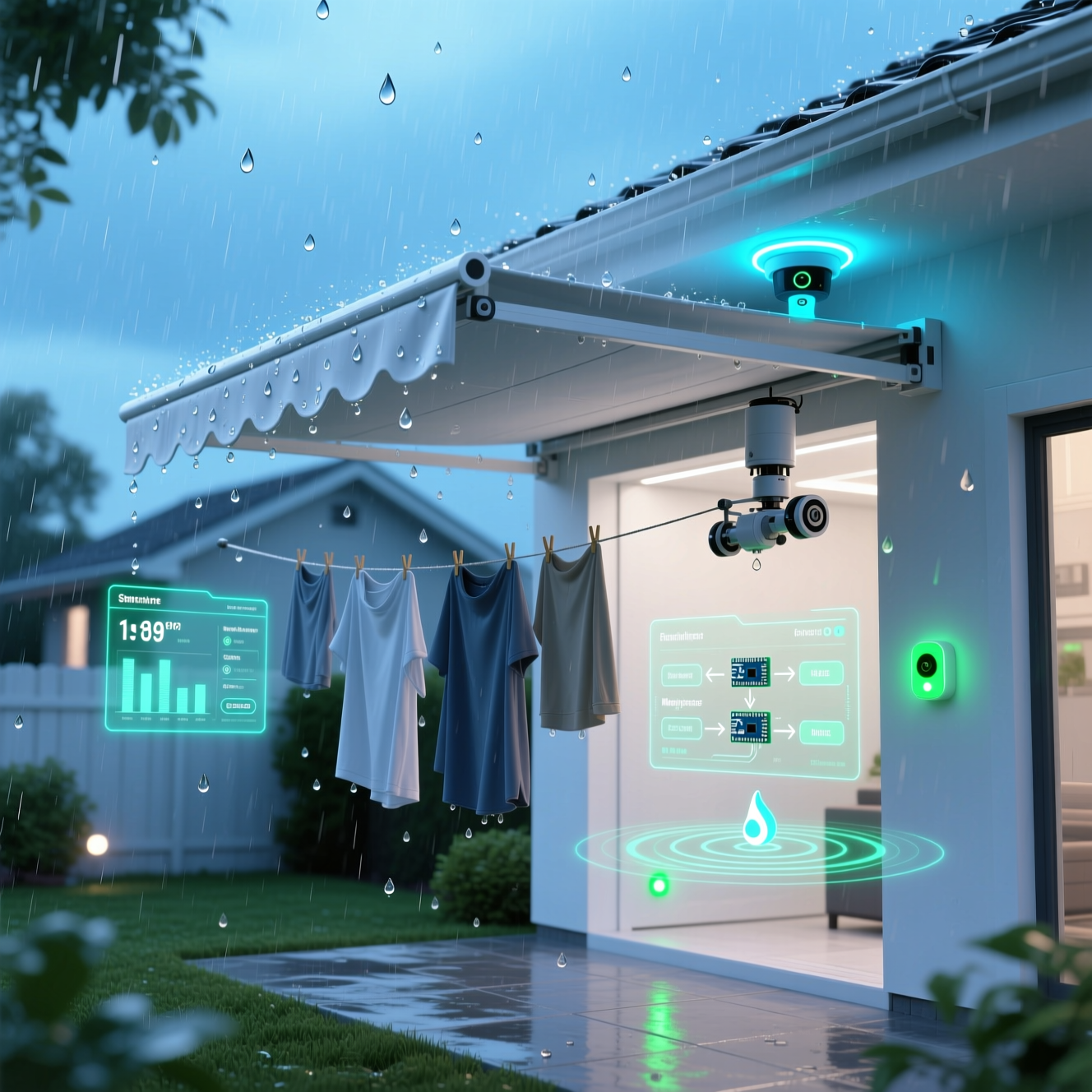
The Automatic Rain-Sensing Cloth Shade System combines sensor technology and automation to provide an efficient solution for protecting clothes from unexpected rainfall. The rain sensor acts as the primary input device that detects moisture from raindrops. Upon detection, it sends signals to the Arduino Nano, which processes the data and triggers the servo motor. The servo motor is mechanically linked to a movable cloth stand that retracts into a sheltered space when rain is sensed. To enhance user awareness, the system incorporates a buzzer for audio alerts and LEDs for visual indicators. A cardboard model is used to demonstrate the prototype, representing the outdoor drying area and the protective shade. The project emphasizes simplicity, low power consumption, and ease of use. It provides hands-on exposure to microcontrollers, actuator control, and sensor integration, making it a practical and educational small-scale engineering project.
The objective of this project is to design and develop a simple automatic system that protects clothes from getting wet during unexpected rain. Many households dry clothes outdoors, making them vulnerable to sudden weather changes. By using a rain sensor, an Arduino Nano, and a servo motor, this project provides a low-cost automated solution to detect rainfall and retract the cloth stand into a sheltered area. An additional buzzer and LED indicators will notify users when the system is activated. This project aims to reduce manual intervention, save time, and prevent damage to clothes caused by repeated washing due to sudden rain. The focus is on creating a practical, compact, and energy-efficient system that can be easily implemented as a household utility. It also provides students with hands-on experience in integrating sensors, actuators, and microcontrollers in a real-world application.
- Automatic detection of rainfall using a rain sensor
- Servo motor mechanism for retracting the cloth stand
- LED indicators for system status display
- Buzzer alert for rain notification
- Compact and easy-to-build prototype using cardboard
- Low power consumption with Arduino Nano
- Simple design, easily replicable for households
- Hands-on learning of sensor-actuator integration
- Real-time protection of clothes during unexpected rain
- Household cloth drying automation
- Smart home utility systems
- Small-scale weather-responsive automation models
- Educational projects for engineering students
- Prototype for future smart shelter systems
- Protects clothes from unexpected rainfall
- Fully automated, requiring no manual intervention
- Low-cost and energy-efficient system
- Compact and lightweight prototype design
- Provides hands-on experience in IoT and automation concepts
- Prototype scale may not handle heavy loads
- Limited motor strength for larger cloth stands
- System depends on a constant power supply
- May malfunction in very high humidity conditions
- Requires manual reset or repositioning after operation
- Integration with solar-powered systems for energy independence
- Use of stronger motors for larger-scale applications
- Smartphone app integration for remote alerts
- Incorporation of wind sensors for added protection
- Development of a fully weatherproof, outdoor-ready model
The Automatic Rain-Sensing Cloth Shade System provides a practical, affordable, and efficient solution to a common household problem—protecting clothes from unexpected rainfall. By utilizing a rain sensor, Arduino Nano, and servo motor, the project demonstrates how simple electronics can automate everyday tasks. The additional use of buzzer alerts and LED indicators ensures that the user is informed whenever the system is triggered. Although designed as a mini-project prototype, it offers a strong foundation for real-world applications in household automation. The project successfully integrates sensor-based inputs with actuator-driven outputs, showcasing the importance of microcontroller-based control systems in engineering. While the prototype has certain limitations in terms of load and durability, it can be enhanced through future improvements such as smartphone integration, stronger motors, and renewable energy support. Overall, this project is a simple yet impactful demonstration of automation for improved convenience and efficiency in daily life.
- Components List (BOM: Bill of Material)
- Block Diagram
- Components : Name, Images, Details
- Circuit Diagram
- Problem Statement
- Abstract
- Introduction
- Challenges and Solutions
- Advantages
- Limitation
- Application
- Future Scope
- Conclusion
- Output Images
- Project Hardware
- Project Report
- Project Simulation OR Demo Video
Want this project or a custom version?
Contact us for complete project, documentation, source code, customization or deployment help.
Payment Policy
Simple two-step payment for every project
Step 1 · Advance
50%
of project cost at confirmation to reserve your slot and start work.
Step 2 · Handover
50%
of project cost on delivery of the complete project package.