
1 / 7
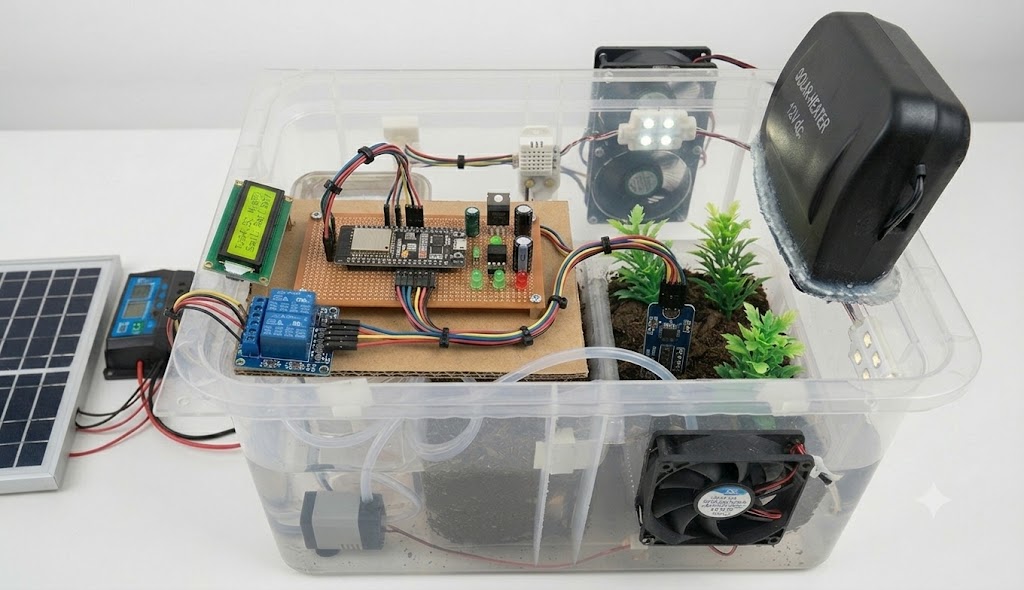
Iot-Based Smart Greenhouse Monitoring And Climate Control System
An Automated Greenhouse System That Maintains Optimal Plant Growth Conditions By Monitoring Temperature, Humidity, And Soil Moisture Via An Iot Dashboard.
Project Gallery
7 files · click to zoom · download icon on each image
About This Project
Tech
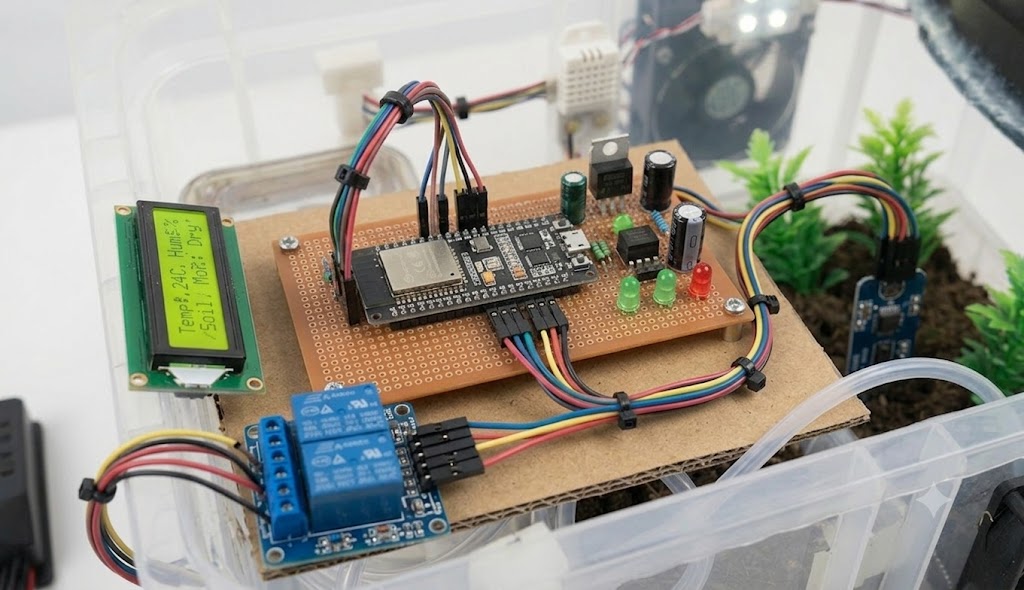
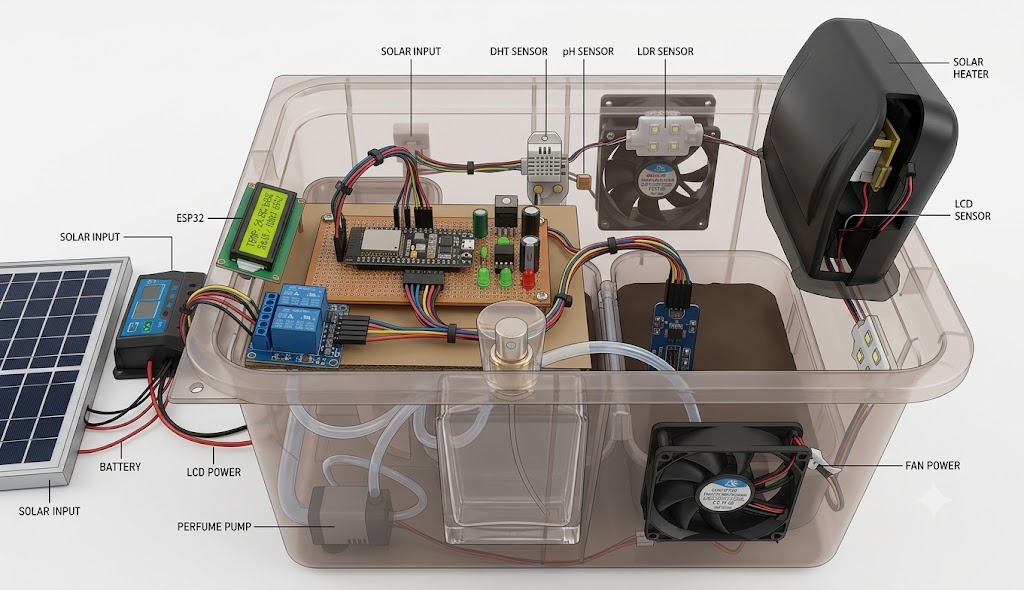
ESP32, Arduino IDE, DHT22, Soil Moisture Sensor, LDR, Relay Module, IoT Cloud Dashboard
Abstract
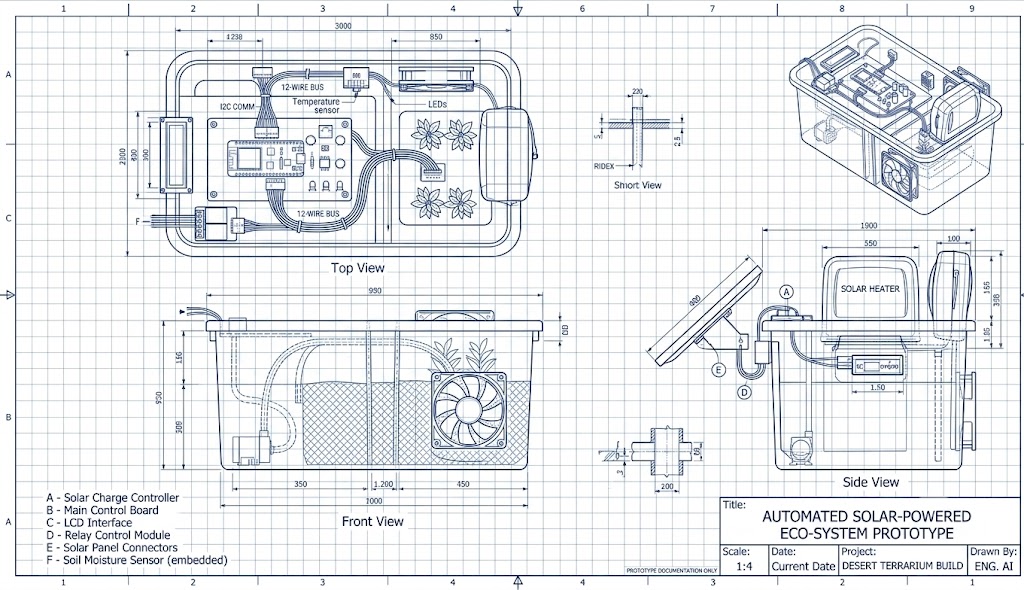
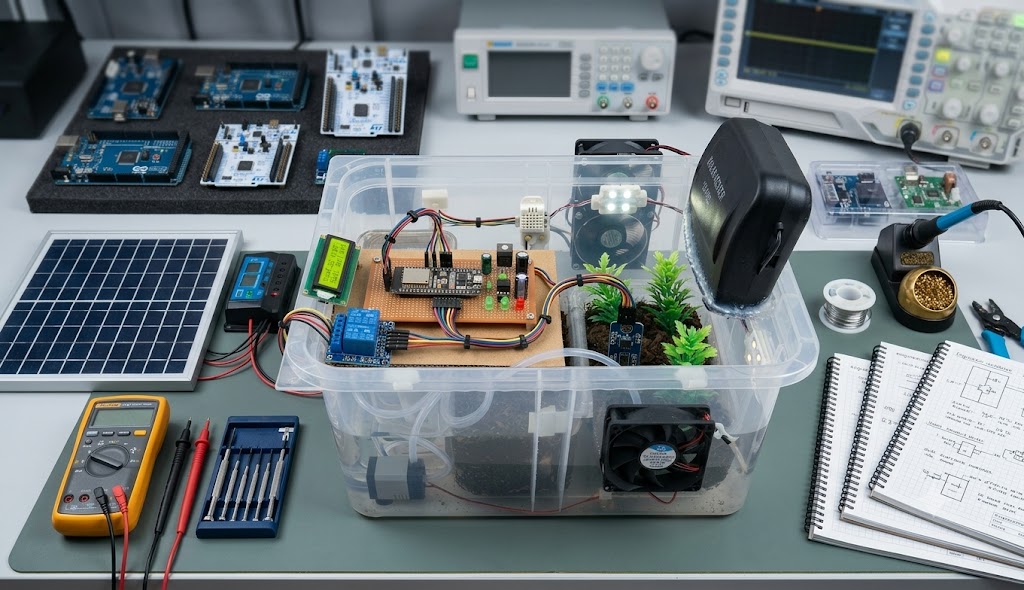
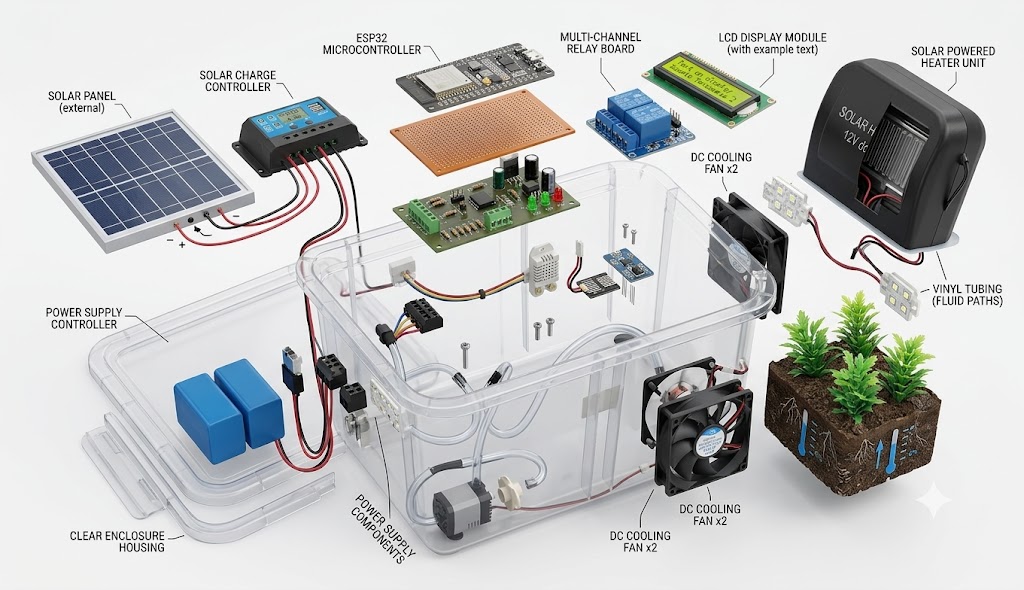
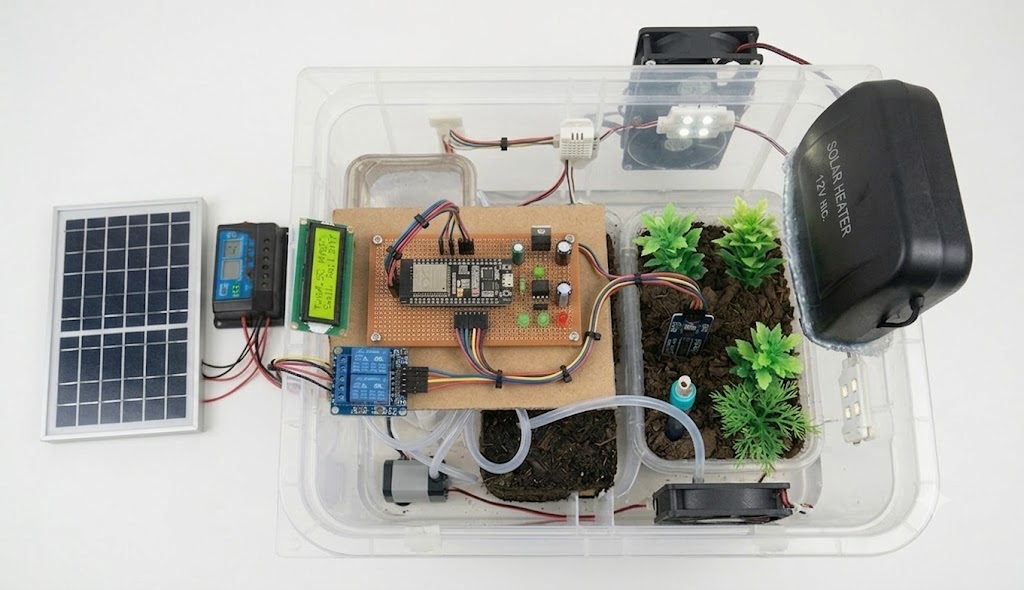
The IoT-Based Smart Greenhouse Monitoring and Climate Control System is designed to automate the environmental management of a controlled agricultural space. By utilizing an ESP32 microcontroller and a suite of sensors, the system continuously monitors critical parameters including ambient temperature, relative humidity, soil moisture levels, and light intensity. When these parameters deviate from predefined thresholds, the system triggers actuators such as water pumps for irrigation, exhaust fans for cooling, and artificial lighting to ensure an ideal growth environment. Data is transmitted in real-time to a cloud-based IoT dashboard, allowing users to remotely monitor plant health and manually override controls. This approach minimizes human intervention, reduces water wastage, and optimizes crop yields by preventing environmental stress, providing a scalable solution for modern precision agriculture.
Keywords
IoT, ESP32, Smart Agriculture, Greenhouse Automation, DHT22, Soil Moisture Sensing, Automated Irrigation, Climate Control, Precision Farming, Embedded Systems, Relay Control, Real-time Monitoring, Cloud Dashboard, LDR Sensor, Environmental Sensing, AgriTech
Project Description
Traditional greenhouse management relies heavily on manual labor and subjective observation, often leading to inconsistent watering and temperature fluctuations that can stunt crop growth or cause disease. The primary objective of this project is to replace manual oversight with a precise, automated climate control system that ensures plants receive the exact resources they need. The system addresses the problem of resource inefficiency—specifically water and electricity—by employing a sensor-driven feedback loop. The approach involves deploying an ESP32 microcontroller as the central hub, which interfaces with a DHT22 sensor for atmospheric data and capacitive soil moisture sensors for root-zone hydration levels. An LDR is used to track sunlight availability. The system logic is programmed to maintain a 'set-point' environment; for instance, if the soil moisture drops below a specific percentage, the relay module activates a submersible pump. Similarly, if the temperature exceeds the threshold, exhaust fans are triggered to circulate air. Beyond local automation, the project integrates IoT capabilities, pushing all telemetry data to a web-based dashboard. This provides the user with historical data trends and remote control capabilities, bridging the gap between traditional farming and digital agriculture. By stabilizing the micro-climate, the system increases the predictability of harvest cycles and reduces the risk of crop failure, offering significant societal value in the context of food security and sustainable farming practices.
Project Features
- Real-time monitoring of temperature and humidity
- Automatic soil moisture detection and irrigation
- Light intensity sensing for automated lighting control
- Remote monitoring via IoT cloud dashboard
- Automatic cooling system using exhaust fans
- Manual override capability via mobile/web interface
- Relay-based switching for high-voltage actuators
- Customizable environmental threshold settings
- Low power consumption using ESP32 deep-sleep modes
- Visual status updates via on-board LEDs or LCD
Specifications
- Hardware components: ESP32 Development Board, DHT22 Temperature and Humidity Sensor, Capacitive Soil Moisture Sensor, LDR (Light Dependent Resistor), 4-Channel Relay Module, 5V DC Water Pump, DC Exhaust Fan, 5V/12V Power Supply, Jumper Wires, Breadboard/PCB
- Software components: Arduino IDE, C++ Programming, Blynk or ThingSpeak IoT Platform, WiFi Manager Library
Report Contents
- Components List (BOM: Bill of Material)
- Block Diagram
- Flow Chart
- Components: Name, Images, Details
- Circuit Diagram
- Problem Statement
- Abstract
- Introduction
- Methodology
- Challenges and Solutions
- Performance Analysis
- Advantages
- Limitation
- Application
- Future Scope
- Conclusion
- Output Images
- Project Deliverables
- Project Hardware
- Project Report
- Project Simulation
Applications
- Commercial hydroponic farms
- Botanical research greenhouses
- Urban rooftop gardening
- Nursery and seedling management
- Organic vegetable cultivation
- Automated home plant care systems
Advantages
- Reduces manual labor and human error
- Optimizes water usage through precision irrigation
- Prevents crop loss due to extreme weather
- Enables remote access from any location
- Ensures consistent plant growth quality
- Lowers operational costs over time
- Scalable for larger agricultural plots
Limitations
- Dependent on stable WiFi connectivity for IoT features
- Sensors require periodic calibration for accuracy
- Limited by the power capacity of the DC supply
- Susceptibility of soil sensors to corrosion over time
Future Scope
- Integration of AI for predictive crop analytics
- Implementation of a solar-powered energy system
- Addition of CO2 sensors for enhanced growth control
- Deployment of a mobile app with push notifications
- Integration of automated nutrient dosing systems
Conclusion
The IoT-Based Smart Greenhouse Monitoring and Climate Control System successfully demonstrates the integration of embedded systems and cloud computing to solve real-world agricultural challenges. By automating the critical variables of moisture, temperature, and light, the system ensures an optimized environment that promotes healthier plant growth and maximizes yield. While the project is constrained by its reliance on wireless connectivity and the lifespan of analog sensors, the trade-off is a significant increase in efficiency and a reduction in resource waste. The transition from manual to automated climate control represents a vital step toward sustainable precision farming. Future iterations incorporating machine learning and renewable energy will further enhance the autonomy and viability of the system, making it a robust tool for both small-scale hobbyists and large-scale commercial farmers.
Want this project or a custom version?
Contact us for complete project, documentation, source code, customization or deployment help.
Payment Policy
Simple two-step payment for every project
Step 1 · Advance
50%
of project cost at confirmation to reserve your slot and start work.
Step 2 · Handover
50%
of project cost on delivery of the complete project package.