
1 / 16
Smart Wearable Navigation Assistant For Blind People
A Smart Iot-Enabled Wearable Navigation Belt Designed To Assist Visually Impaired Individuals By Detecting Obstacles In Real-Time And Providing Haptic, Visual, And Voice-Guided Feedback Through A Custom Mobile Application.
Project Gallery
16 files · click to zoom · download icon on each image
About This Project
Tech
Arduino Nano, ESP32, Arduino IDE, Ultrasonic Sensors, Vibration Motors, Mobile Application, IoT Server, Bluetooth/Wireless Communication, AI Assisted Voice Guidance
Abstract
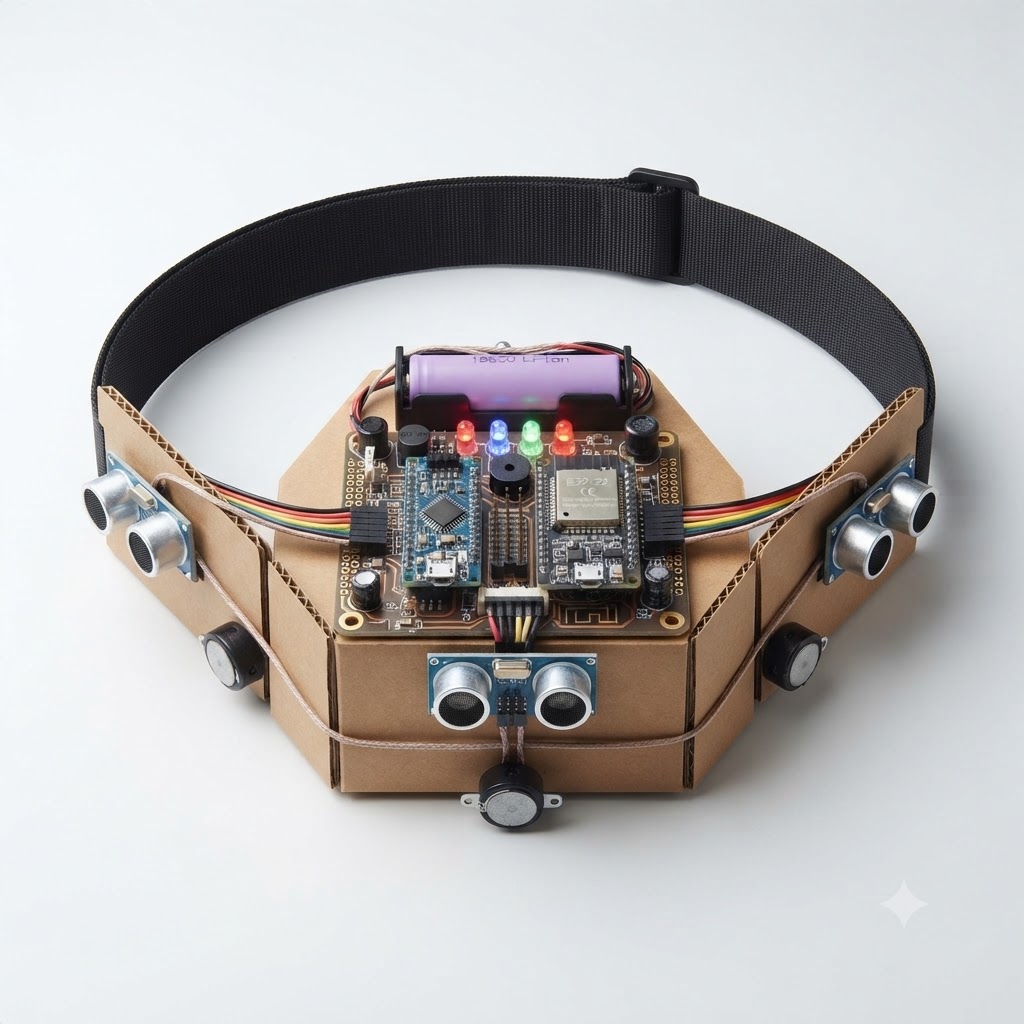
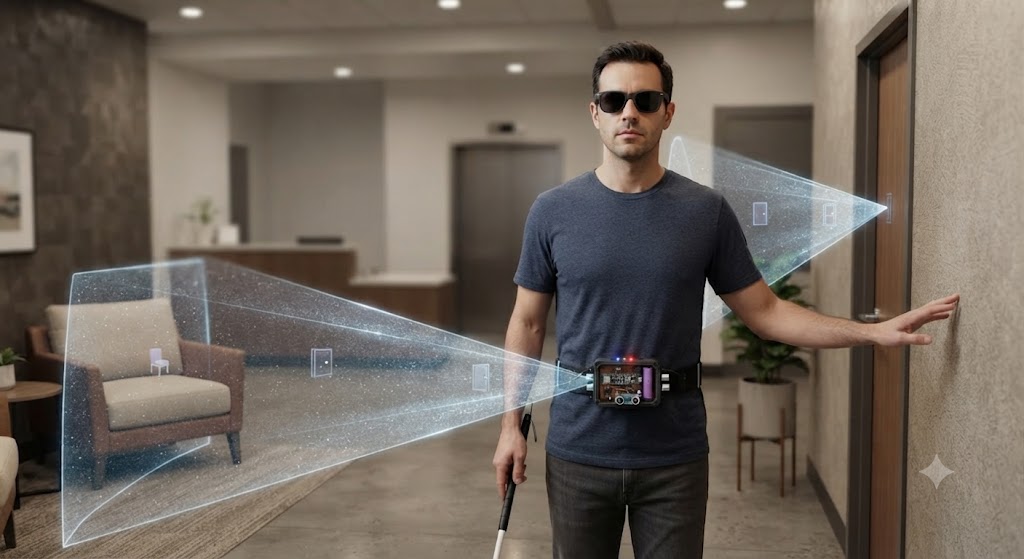
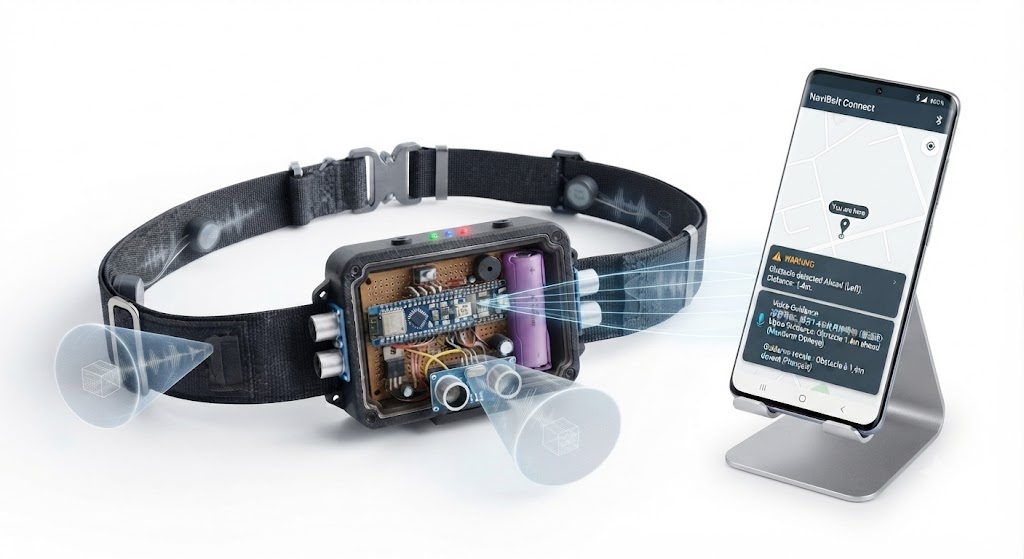
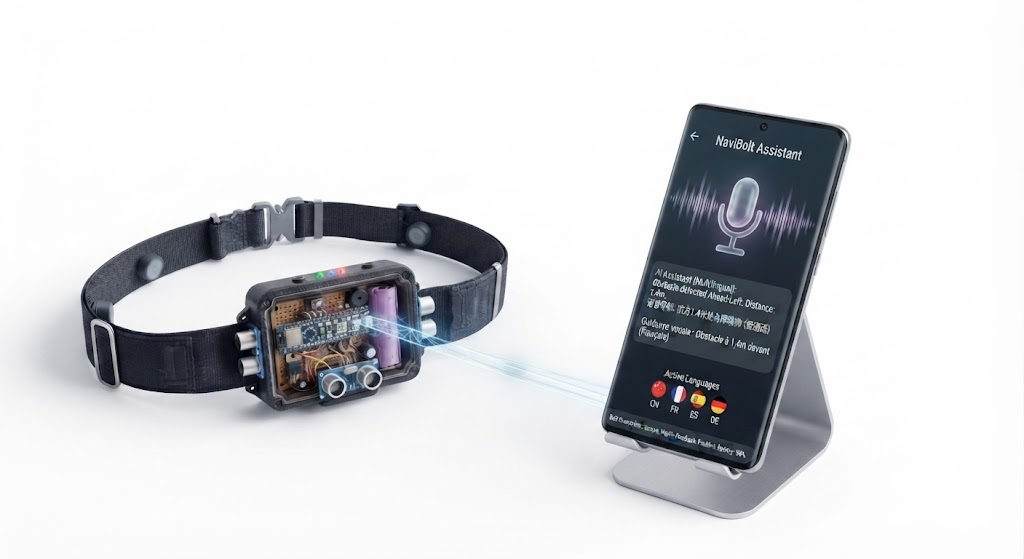
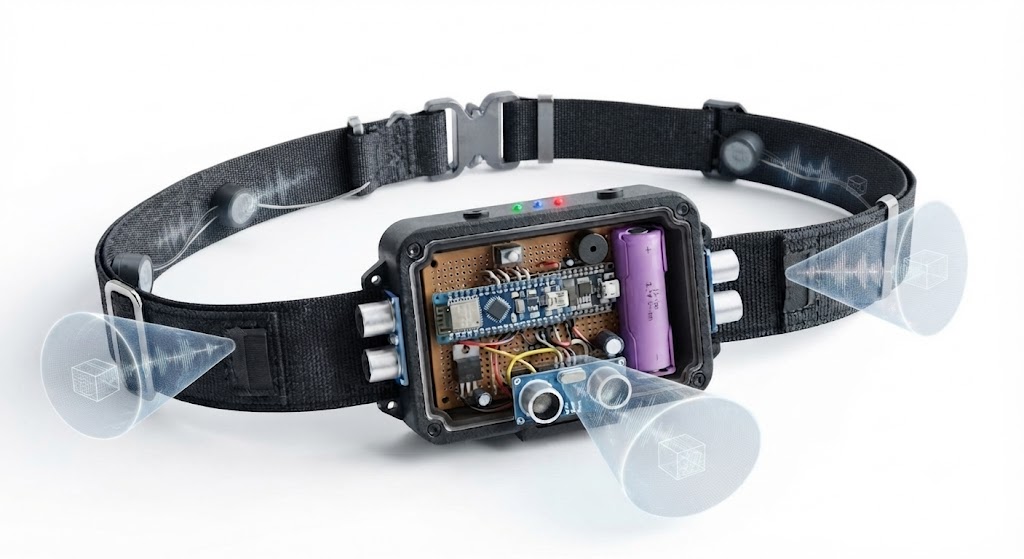
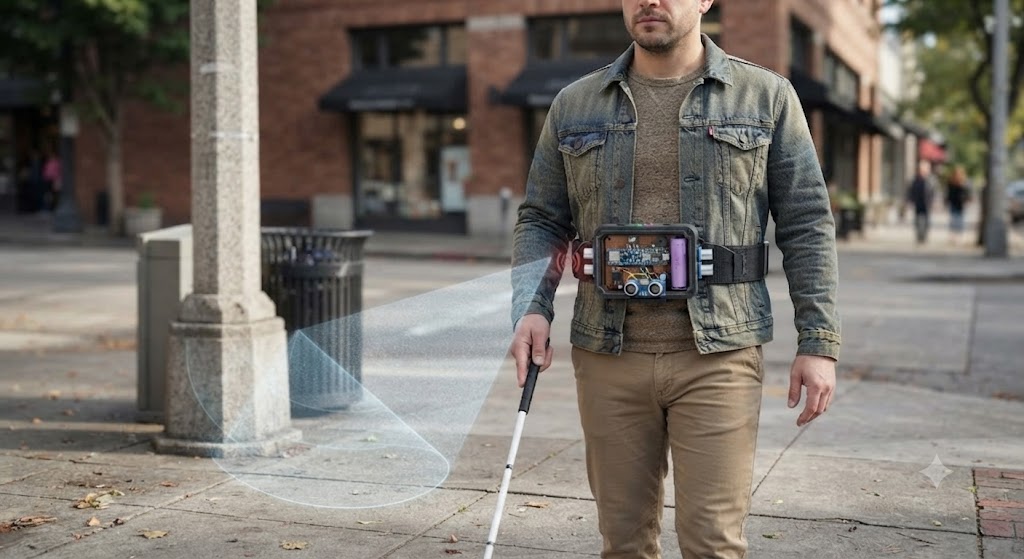
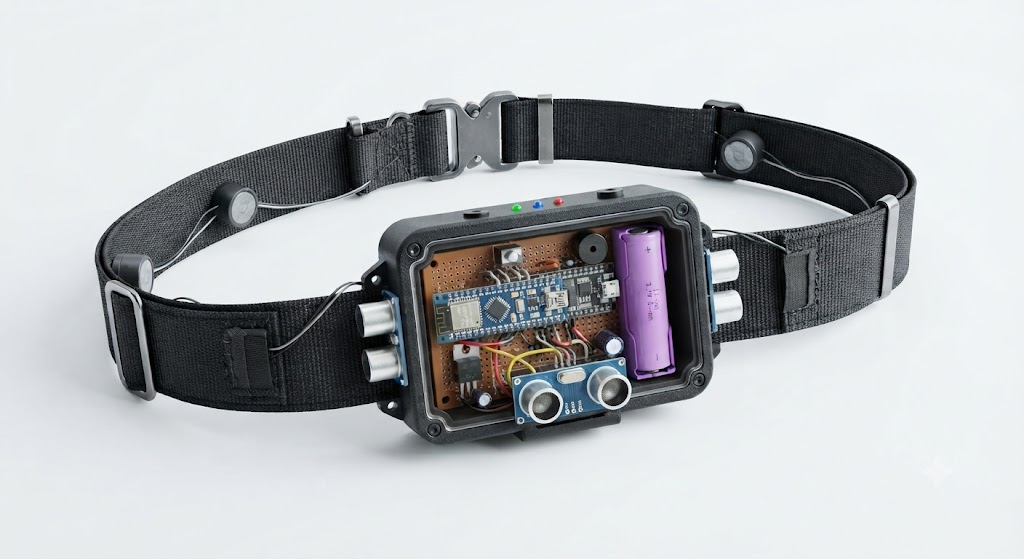
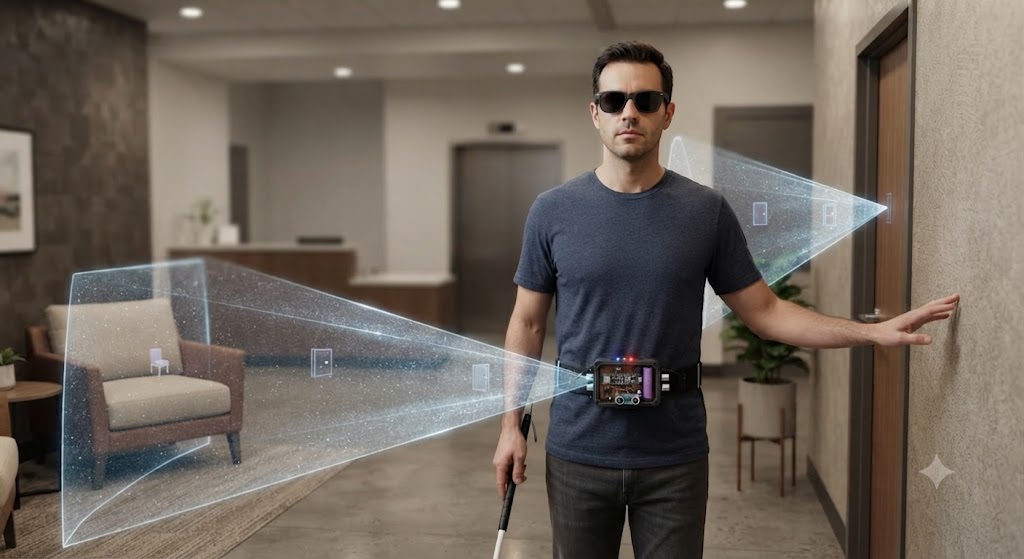
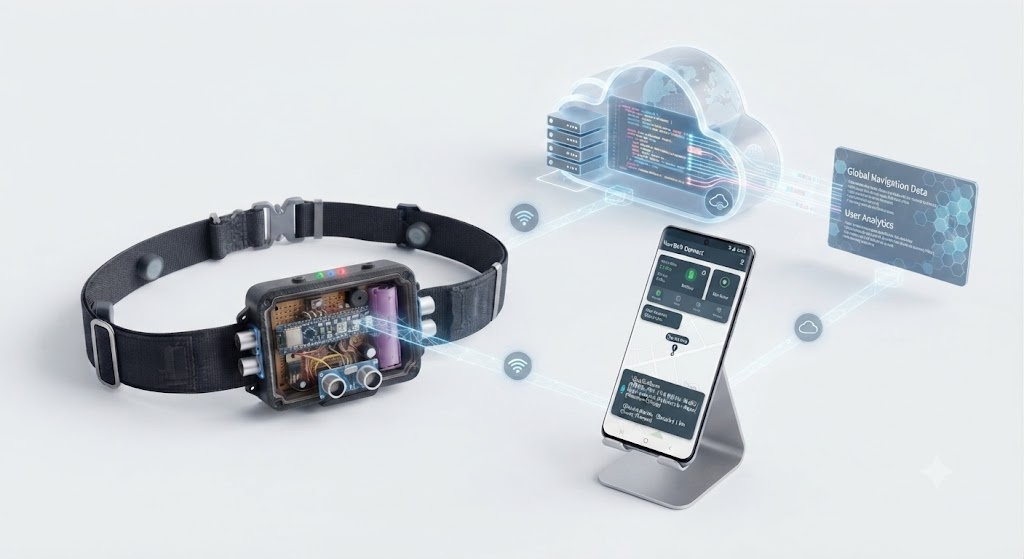
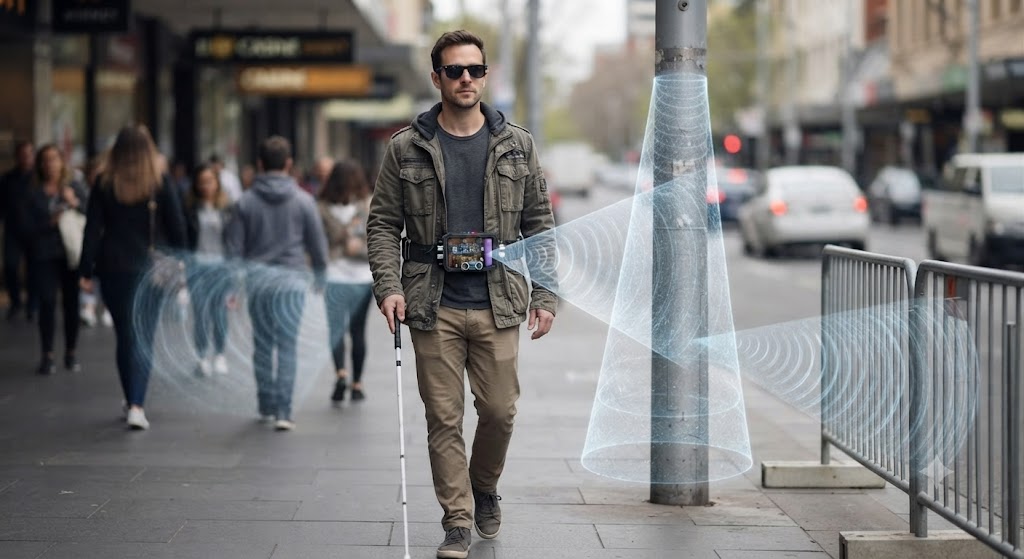
The Smart Wearable Navigation Assistant is an IoT-enabled wearable assistive system developed to improve the mobility and safety of visually impaired individuals. Unlike traditional navigation aids, the proposed system utilizes a waist-mounted smart belt equipped with three ultrasonic sensors positioned to monitor the front, left, and right directions simultaneously. The sensing system continuously detects nearby obstacles and immediately provides directional feedback using dedicated vibration motors, LEDs, and a buzzer. The system is powered by an Arduino Nano for real-time sensor processing, while an ESP32 module handles wireless communication between the wearable device and a custom-developed mobile application through Bluetooth or internet connectivity. The mobile application converts obstacle information into multilingual voice guidance, allowing users to receive navigation instructions in their preferred language. The complete ecosystem also includes a custom IoT server for data communication and future intelligent services. Designed as a compact wearable prototype, the project combines embedded systems, IoT, mobile application development, and assistive technology to provide a practical navigation solution for blind and visually impaired users. Introduction Methodology Hardware Design Software Design Mobile Application Design IoT Server Architecture Challenges and Solutions Testing and Performance Analysis
Keywords
Assistive Technology, Smart Wearable, Blind Navigation System, ESP32, Arduino Nano, Ultrasonic Sensor, Haptic Feedback, Vibration Motors, IoT, Embedded Systems, Mobile Application, Voice Guidance, Multilingual Navigation, Wearable Electronics, Obstacle Detection, Smart Mobility, Human Computer Interaction, Healthcare IoT
Project Description
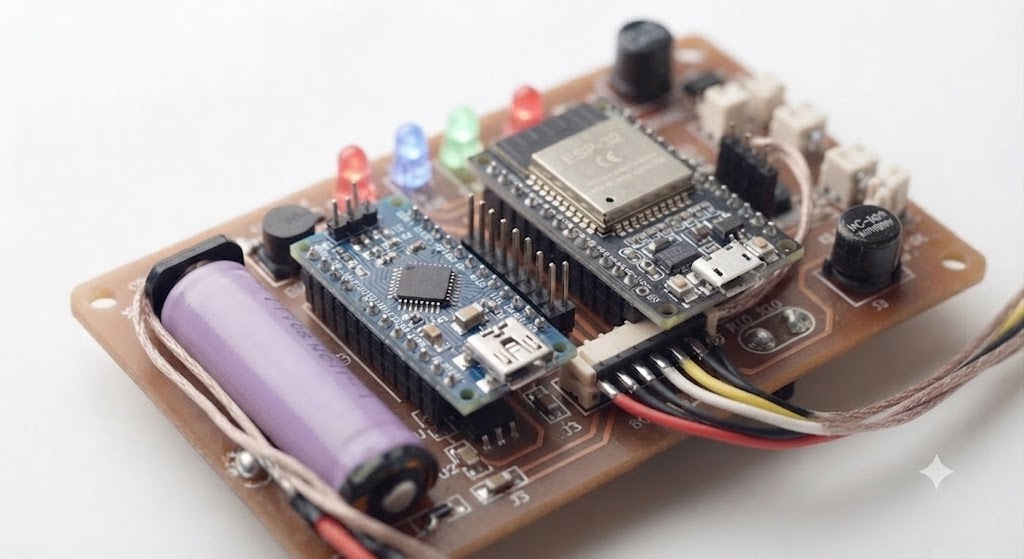
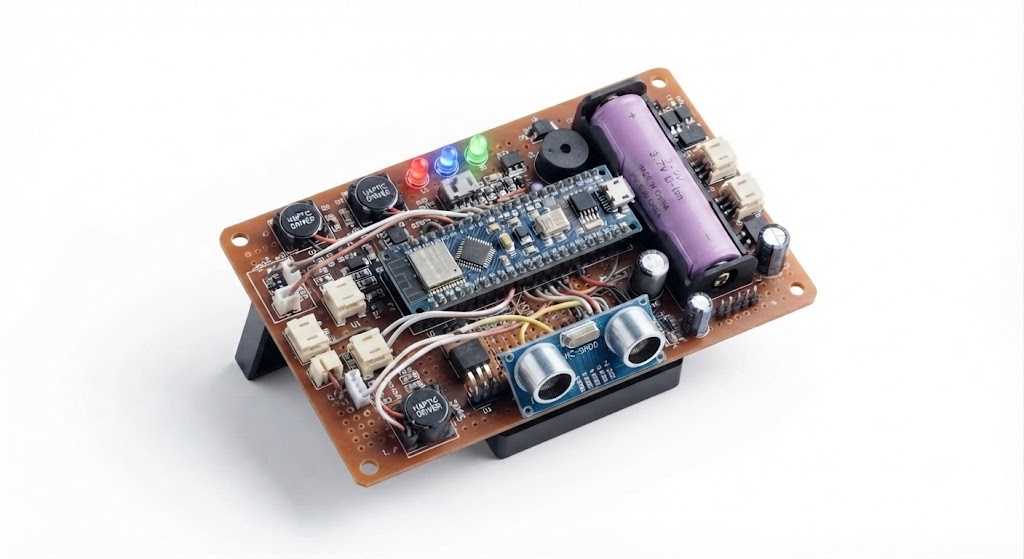
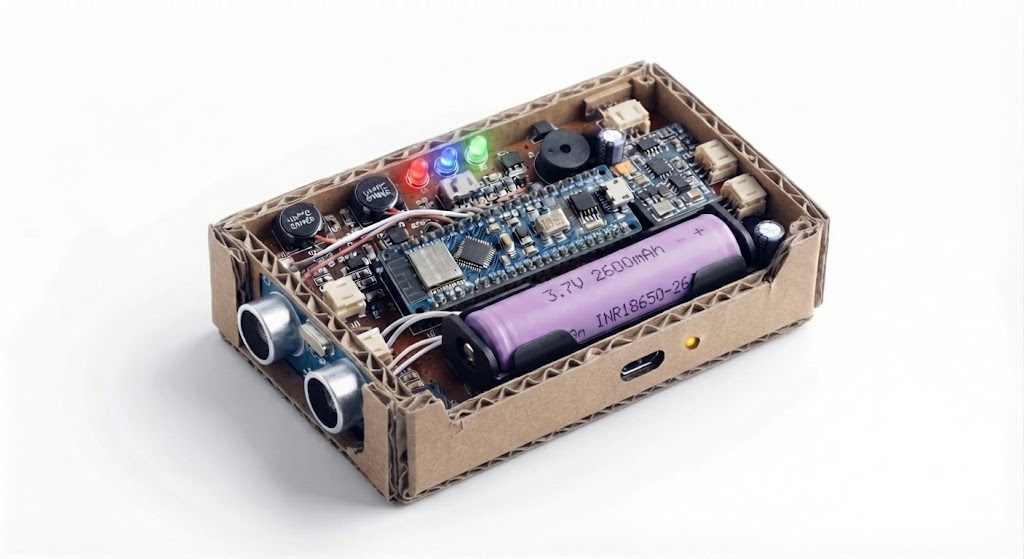
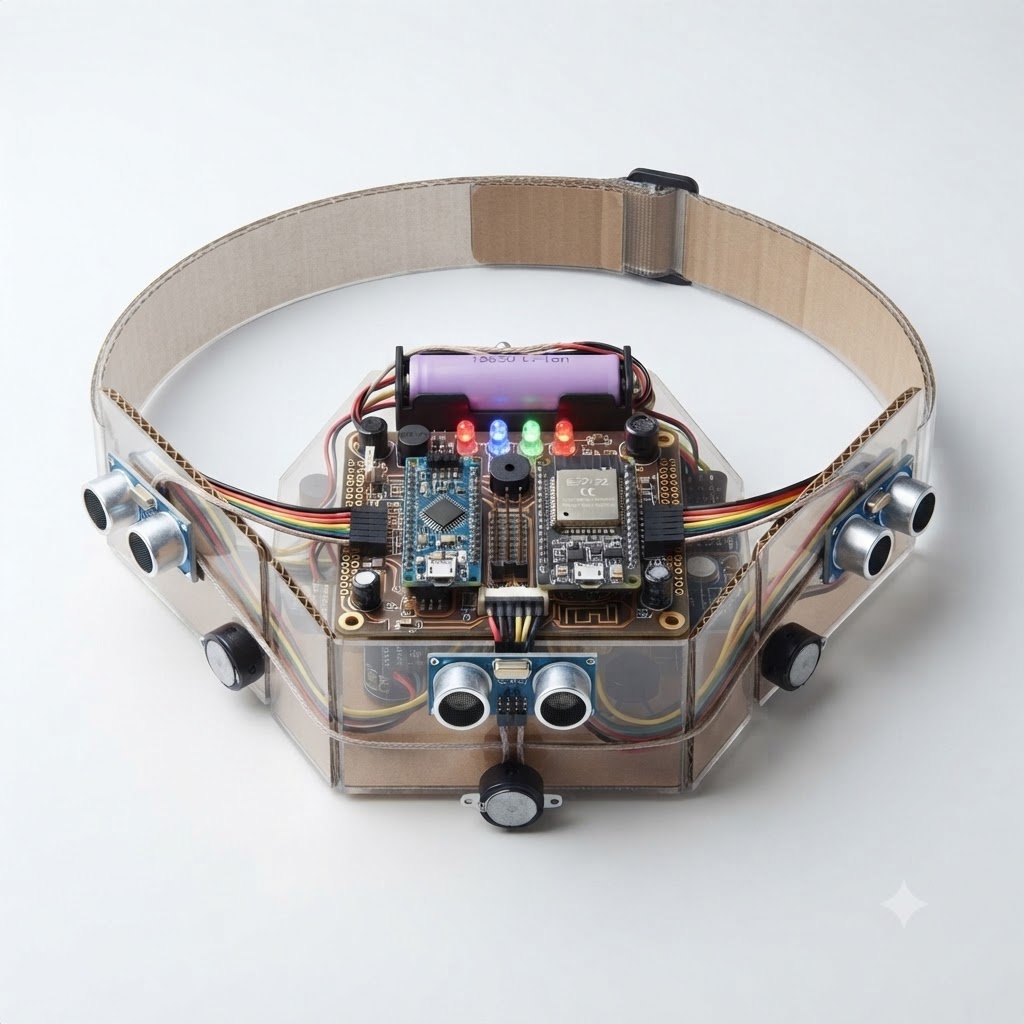
Traditional white canes provide basic assistance to visually impaired individuals but are limited in detecting obstacles beyond ground level or across multiple directions simultaneously. To overcome these limitations, this project introduces a smart wearable navigation belt that continuously monitors the surrounding environment and provides intuitive feedback to the user. The wearable belt incorporates three ultrasonic sensors mounted in front-facing, left-facing, and right-facing positions to create a wider obstacle detection area. These sensors continuously measure the distance to nearby objects. The sensor data is processed by an Arduino Nano, which determines the direction of the detected obstacle. Whenever an obstacle is detected within the configured safety range, the corresponding directional vibration motor is activated, allowing the user to identify whether the obstacle is located in the front, left, or right direction through haptic feedback. Simultaneously, LEDs provide visual indication, while a buzzer generates an audible alert for additional awareness. An ESP32 module enables wireless communication between the wearable device and a custom-developed mobile application. The application receives obstacle information and converts it into clear multilingual voice guidance, allowing visually impaired users to receive navigation instructions in multiple supported languages. The communication architecture is designed to support both short-range and internet-enabled connectivity, allowing flexibility for future expansion. The project also incorporates a custom IoT server that manages communication between the wearable device and the mobile application. This architecture enables centralized monitoring, future intelligent services, and scalable integration with additional smart features. The complete system is designed as a compact prototype product built on a custom PCB, integrating hardware, embedded software, mobile application, and cloud infrastructure into a unified wearable assistive solution.
Project Features
- Waist-mounted wearable navigation belt for comfortable daily use
- Three ultrasonic sensors positioned for Front, Left, and Right obstacle detection
- Real-time multi-direction obstacle monitoring
- Independent directional vibration motors for haptic navigation feedback
- LED indication corresponding to obstacle direction
- Audible buzzer alerts for immediate warning
- Arduino Nano based real-time sensor processing
- ESP32 based wireless communication module
- Custom mobile application for voice-guided assistance
- Multilingual voice guidance supporting multiple regional languages
- Custom IoT server for device communication and future scalability
- Low latency obstacle detection and feedback
- Compact, lightweight, and rechargeable prototype design
- Modular hardware architecture for future upgrades
Specifications
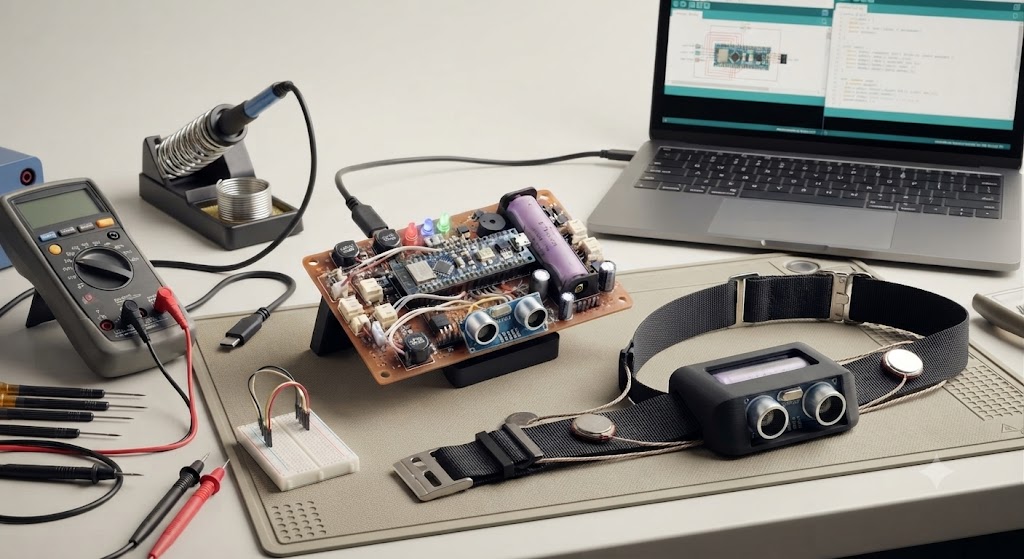
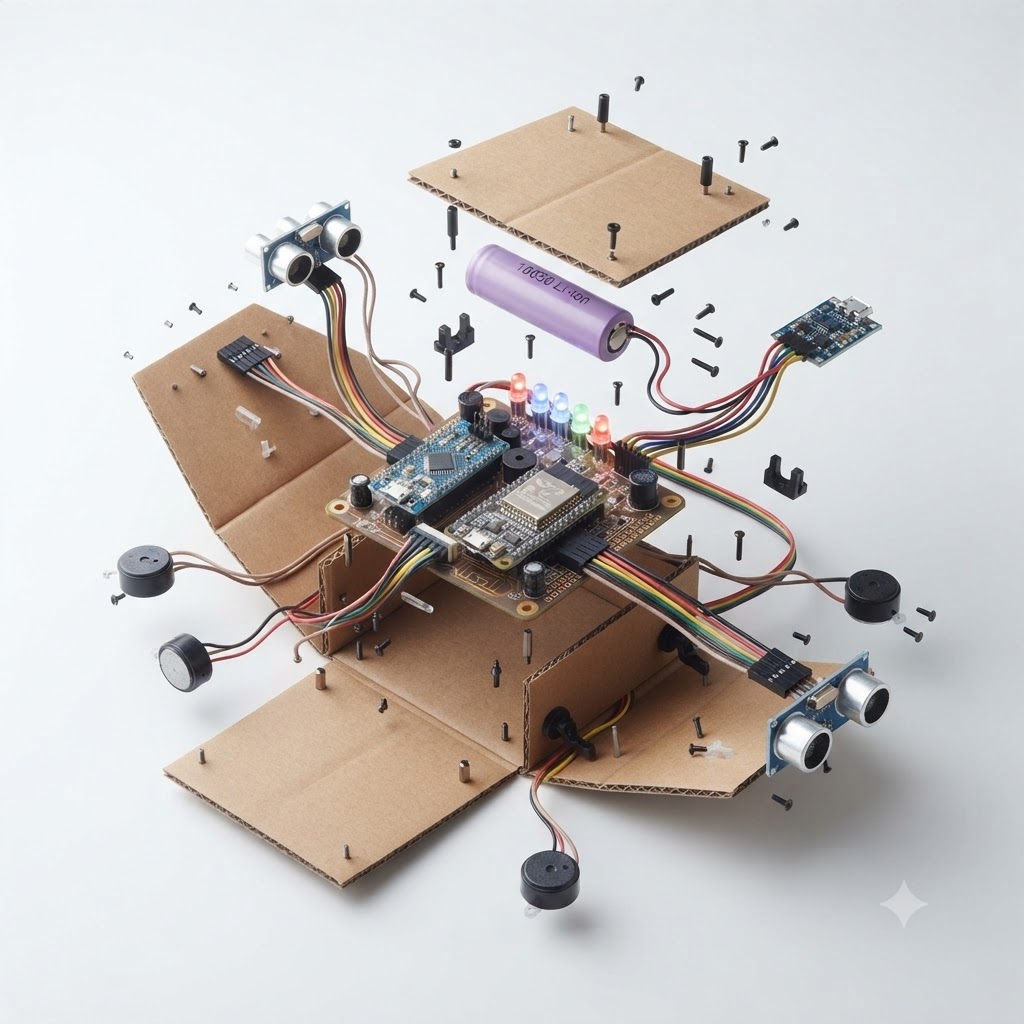
- Hardware components: Arduino Nano, ESP32 Development Board, Three Ultrasonic Sensors, Three Vibration Motors, LEDs, Piezo Buzzer, Rechargeable Battery, Battery Charging Circuit, Custom PCB, Power Management Circuit, Waist Mounted Belt Assembly
- Software components: Arduino IDE, Embedded C++, ESP32 Communication Libraries, Custom Mobile Application, Custom IoT Server, AI Assisted Voice Generation Module, Database and Cloud Communication Services
Report Contents
- Components List (BOM: Bill of Material)
- Block Diagram
- Flow Chart
- Components: Name, Images, Details
- Circuit Diagram
- Problem Statement
- Abstract
- Introduction
- Methodology
- Challenges and Solutions
- Performance Analysis
- Advantages
- Limitation
- Application
- Future Scope
- Conclusion
- Output Images
- Project Deliverables
- Project Hardware
- Project Report
- Project Simulation
Applications
- Navigation assistance for visually impaired individuals
- Smart wearable healthcare devices
- Elderly assistance systems
- Rehabilitation centers
- Smart mobility research
- Human-computer interaction research
- IoT-based assistive technology
- Educational and engineering research projects
Advantages
- Detects obstacles in three directions simultaneously
- Provides intuitive directional haptic feedback
- Voice guidance improves navigation confidence
- Supports multiple languages for accessibility
- Wearable hands-free design
- Custom mobile application integration
- Scalable IoT-based architecture
- Low-cost prototype compared to commercial assistive devices
- Modular design for future enhancements
- Product-oriented embedded system architecture
Limitations
- Ultrasonic sensors may have reduced accuracy on sound-absorbing surfaces.
- Environmental conditions may influence sensing performance.
- Wireless communication depends on network availability when internet connectivity is used.
- Battery backup depends on continuous sensor operation and communication frequency.
Future Scope
- AI-assisted environmental understanding
- Intelligent object classification
- Advanced voice interaction capabilities
- Smart emergency alert system
- Caregiver monitoring features
- Indoor positioning support
- Integration with smart city infrastructure
- Enhanced multilingual conversational assistance
- Improved wearable ergonomics
- Miniaturized product enclosure for commercial deployment
Conclusion
Output Images The Smart Wearable Navigation Assistant presents a modern approach to assistive technology by combining embedded systems, IoT, mobile application development, and wearable electronics into a unified navigation solution for visually impaired individuals. By utilizing three strategically positioned ultrasonic sensors, the system continuously detects obstacles surrounding the user and provides immediate directional feedback through dedicated vibration motors, LEDs, and buzzer alerts. The integration of a custom mobile application enables multilingual voice guidance, making navigation more intuitive and accessible for users with diverse language preferences. Supported by a custom IoT server, the platform establishes a scalable foundation for future intelligent services and advanced assistive capabilities. Developed as a compact PCB-based wearable prototype, the project demonstrates how low-cost embedded hardware and modern IoT technologies can be transformed into a practical assistive product. The modular architecture also ensures future expandability, making it a strong foundation for next-generation smart wearable navigation systems for visually impaired individuals.
Want this project or a custom version?
Contact us for complete project, documentation, source code, customization or deployment help.
Payment Policy
Simple two-step payment for every project
Step 1 · Advance
50%
of project cost at confirmation to reserve your slot and start work.
Step 2 · Handover
50%
of project cost on delivery of the complete project package.